
27. January 2026
Renovations with AI: New Tools for Interior Architecture
Generative artificial intelligence is changing renovation projects, including in hotels and restaurants. DOBAS explains the advantages of this new interior architecture tool and why human knowledge remains irreplaceable.

Author
Verena Zaugg
Improved efficiency, quality of experience and decision-making
Today’s hotel and restaurant patrons expect far more than mere functionality. They want atmosphere and an experience with recognition value – not to mention something that can be easily posted on social media. They want a cultivated overall impression that does not show traces of wear or technical flaws. Trust can only be established when design and quality have made a good impression.
However, any renovation that lives up to these expectations causes many organisational and financial challenges, such as short planning phases, tight budgets and renovation work while the business is still in operation. In this environment, artificial intelligence – especially generative AI – offers new possibilities.
Speed opens up perspectives
Generative AI’s strong point is its speed. Tasks that used to take days or weeks are now performed in just a few hours: furnishing concepts, colour and material concepts or different layout options can be simulated early on in the process. This creates quick visualisations that serve as a basis for discussing different scenarios – from small interventions to complete renovations.
AI provides help during the decision-making process, but cannot replace the informed judgment of experts. Ensuring fire safety, asbestos clean-up and technical feasibility is still the job of experienced CAD designers.
Visual aid in the design phase
There are many benefits of using generative AI in an early project phase:
- Improved communication: visualisations create a common basis for discussion among hoteliers, restaurateurs, design teams and other parties involved.
- Comparison of possibilities: different concepts can be portrayed quickly and compared on the spot.
- Generation of different atmospheres: colour and material studies give a realistic impression at the start of the project, without requiring physical samples.
- Optimisation of floor plans: new tools analyse flows and visitor trajectories to make rooms more functional.
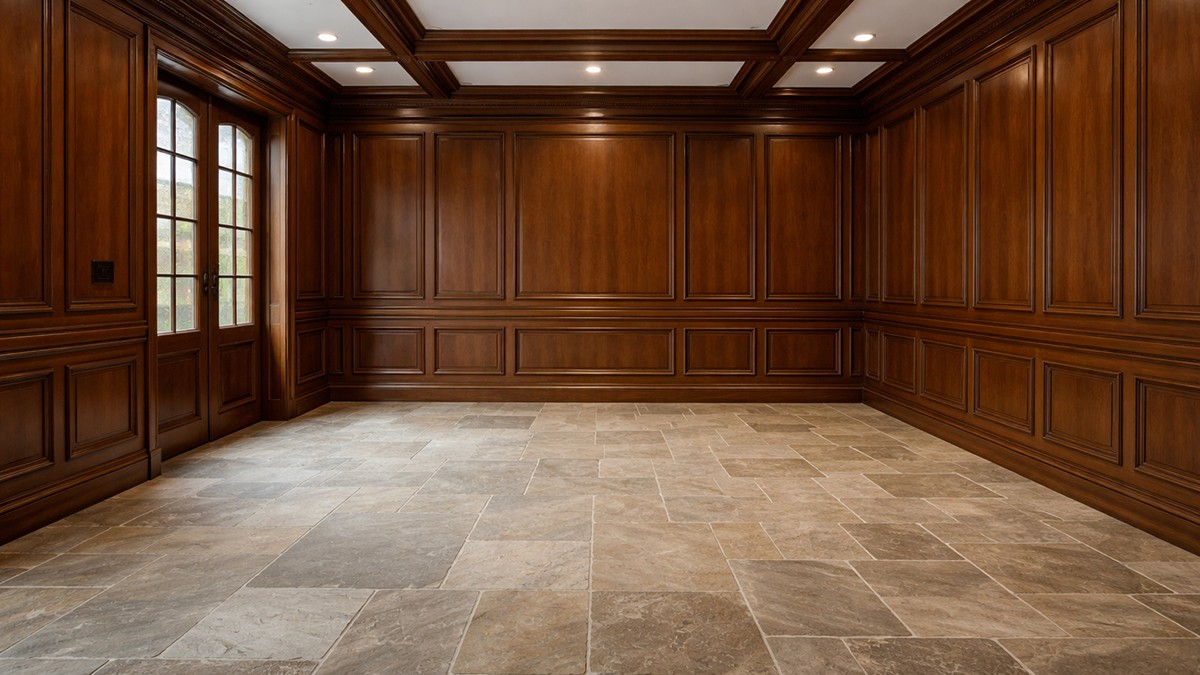
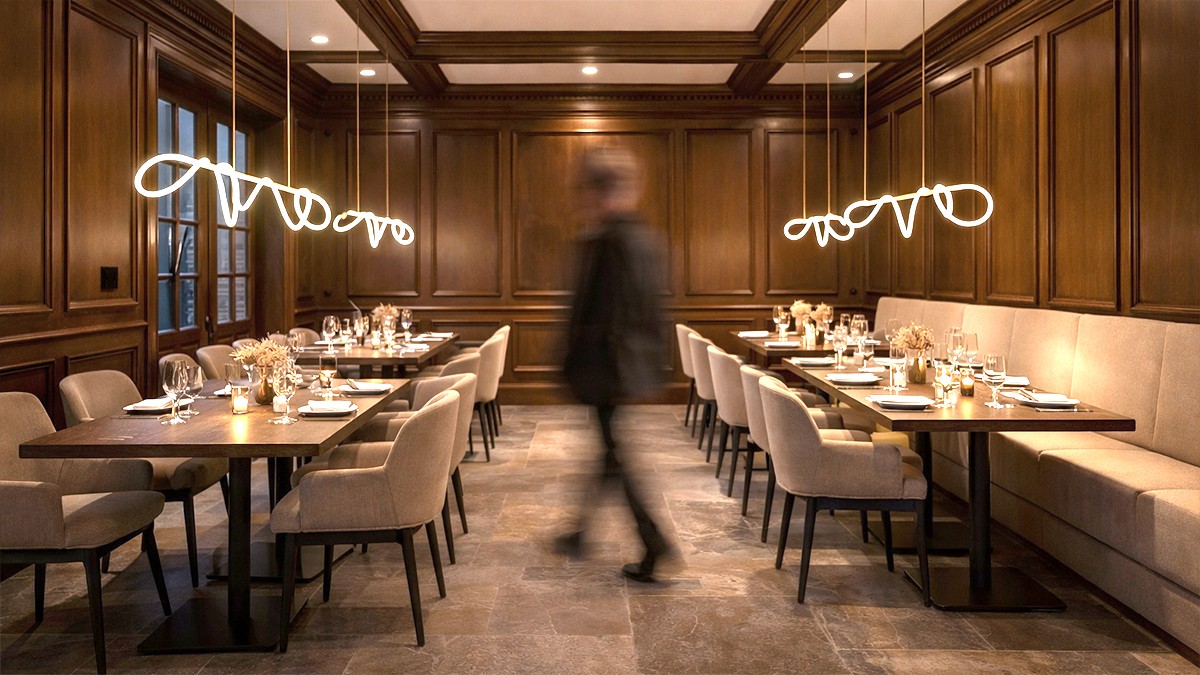
Artificial intelligence offers inspiration, not a solution
Despite all the advantages of AI, it is clear that it provides ideas, not finished results. Its output is based on statistical probabilities – not on context, brands or operational demands. These are precisely the places where human expertise is necessary. We scrutinise AI output, review it for feasibility and, based on that, develop original, authentic solutions. That is the only way to guarantee the true added value of AI. It is also worth noting that the result is only as good as the prompt. Experience and design sensibility are also crucial when using AI.
Design is still human
The task of interior architecture is to translate visions into viable, functional concepts. Questions like «Is this compatible with the business’s identity?», «How will workflows be impacted by the redesign?» or «Which solution is the most realistic financially?» are not something a model can answer comprehensively on its own. Experience, intuition and expert precision matter here as well.
Artificial intelligence meets VR and AR
What is beginning with individual images today is developing at breakneck speed. With the help of virtual and augmented reality, immersive experiences are emerging that bring spaces to life before they are built (learn about how virtual reality works in this Space Story). In the future, interiors may even be able to respond to individual guest preferences – for example, by adjusting the lighting and temperature.
Conclusion: AI is a complement, not a replacement
Generative AI opens up new possibilities for renovation projects in the hospitality industry. It accelerates processes, supports planning tasks and expands creative freedom. But it is only in combination with human expertise that AI can help create impactful and inspiring interior architecture with convincing long-term results.
Note: The original version of this article was published in the January 2026 issue of htr hotelrevue.
Verena Zaugg
|
Interior Architect
Explore More Space Stories
Space Story #35 | 29 May 2023
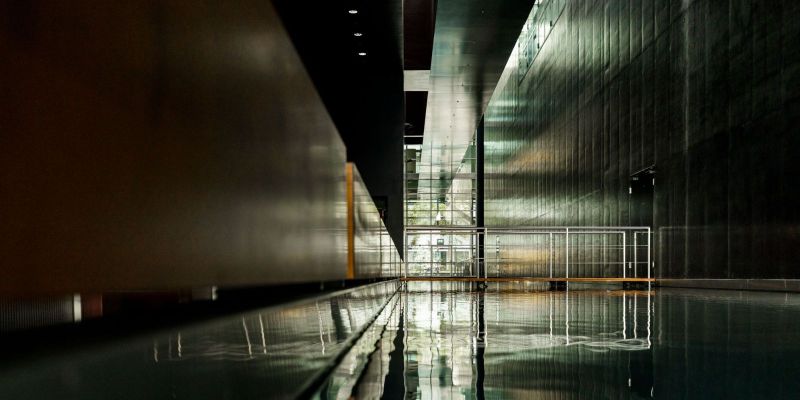
Going with the Flow: Water in Architecture and Interior Design
We recently reported on greenery in interior architecture, but this post is dedicated to water: the blue gold. For that, we did a deep dive into the world of water with expert Benjamin Winzeler, and talked about the element’s benefits and risks.

Space Story #45 | 22 January 2025
Travel Journal by Interior Architect Carolin: Costa Rica
Interior architect Carolin Kotte got to experience «pura vida» on her travels through Costa Rica. She was especially impressed by the relationship between architecture and nature – and the morning wake-up calls of the howler monkeys.