
16. April 2026
Partial Refurbishment Instead of a Complete Rebuild: Using Interior Architecture with Intent in Existing Hotels and Restaurants
Hotels and restaurants that want to remain successful need to evolve with the times – spatially too. However, not every change automatically leads to better quality. What matters is that every intervention is thoughtfully integrated and true to the character of the hotel or restaurant.

Author
Isabelle D'Angelo
Rebuild less, design with greater intent
Hotels and restaurants that want to remain successful need to evolve with the times – spatially too. However, not every change automatically leads to better quality. What matters is that every intervention is thoughtfully integrated and true to the character of the hotel or restaurant.
A complete rebuild is often unnecessary and rarely the best way to improve spatial quality. Even targeted refurbishments – such as redesigning the reception area or upgrading a bar – can create a significant impact.
Particularly in restaurants, atmosphere directly influences how long guests stay and how much they spend. In hotels, meanwhile, the lobby, guest rooms and transitional spaces shape the entire guest experience. A thoughtful intervention here can make a noticeable difference through small, well-placed changes.
Concept-led design over piecemeal updates
Partial refurbishments do, however, carry the risk of design inconsistencies: new elements introduced without a cohesive design concept can quickly feel out of place and disrupt the overall spatial harmony.
A well-considered design concept treats materials, colours, lighting and furnishings as one coherent system. The aim is not to change as much as possible, but to integrate new elements so naturally that they feel inherent to the space – while allowing the existing atmosphere to evolve further.
Unlocking the design potential of existing spaces
Whether a partial refurbishment achieves the desired outcome depends largely on how well the existing space is understood. In many cases, the existing fabric offers more potential than expected.
Here, three design approaches are especially effective:
-
Zoning: Colours, lighting and materials structure spaces, improve orientation and define distinct zones.
-
Enhancement: Textiles, finishes or furniture refinements can bring new life to spaces without fundamentally changing them.
-
Staging: Defining features such as bars or wall panelling take centre stage when highlighted thoughtfully.
This creates spaces that do not require a complete redesign to make a strong impact.
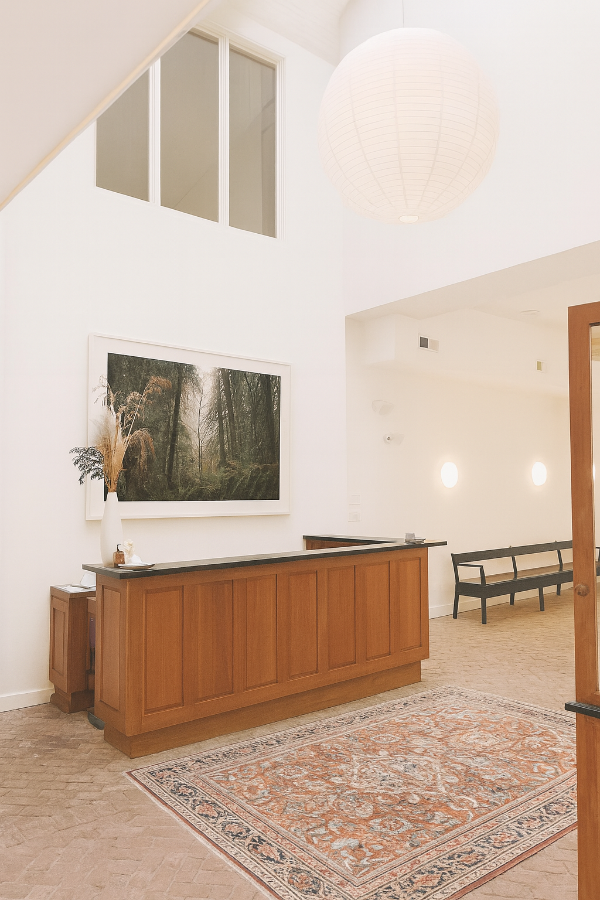
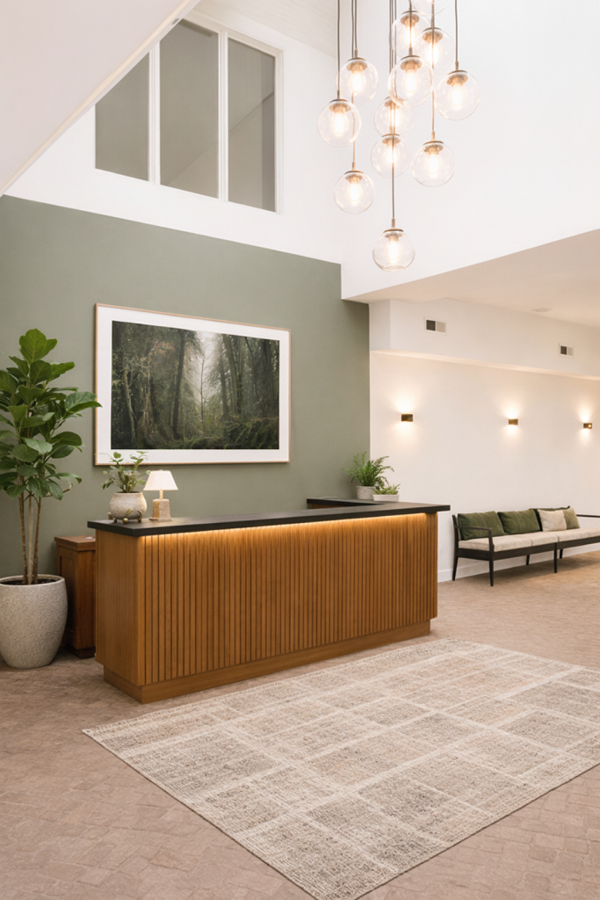
Visualisations for better design decisions
Particularly when intervening in existing spaces, it is often difficult to assess the impact in advance. This is where visualisations provide clarity: they allow design options to be compared, reveal spatial relationships and translate ideas into tangible visuals.
This not only supports internal decision-making, but also improves coordination between owners, Realisation teams and on-site teams.
The value of sustainability
Refurbishments are not only economically sound, but also environmentally meaningful. Making use of what is already there saves resources and reduces interventions in the building fabric. A clear statement at a time when sustainability has become the norm.
The result: less intervention, greater impact
Interior architecture in existing spaces means designing with intent rather than starting from scratch. Developing what is already there with care and a clear concept creates spaces that feel current, functional and authentic – while strengthening the guest experience over the long term.
Note: The original version of this article was published in hotelrevue on 19 March 2026.
Isabelle D'Angelo
|
Interior Architect
Explore More Space Stories
Space Story #17 | 30 August 2021
How thousands of Points become an Interior Architecture Plan
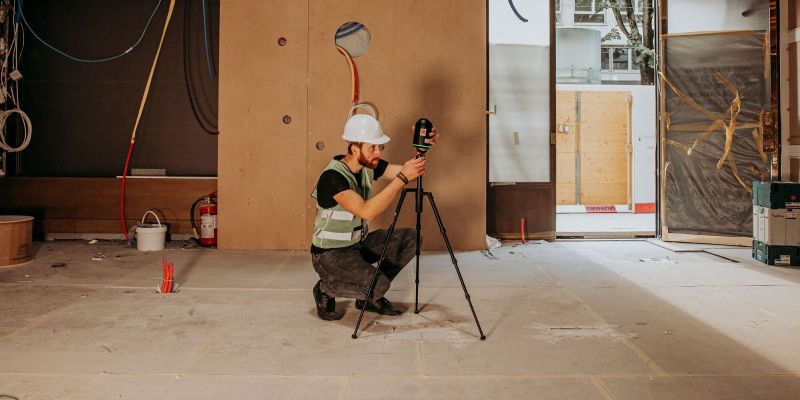
To achieve our commitment to the highest precision, we use a 360-degree laser scanner for site measurements. Based on thousands of data points, we then create detailed plans.
Space Story #47 | 27 March 2025
Restaurant Acoustics: How Interior Architecture Shapes the Dining Experience
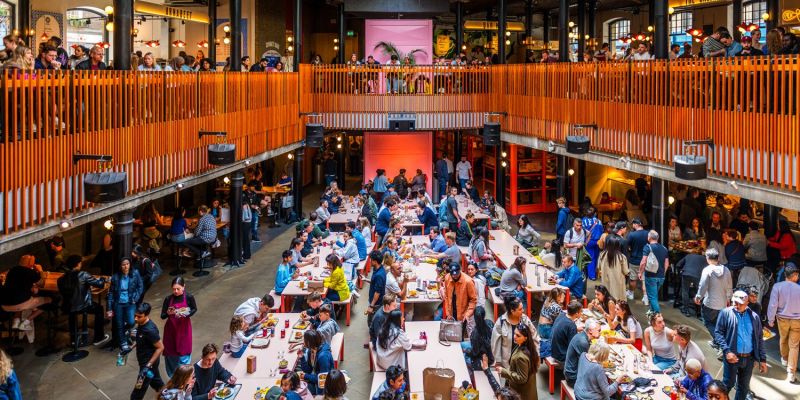
Our Creation team discovered acoustics solutions for offices in the blox showroom. But acoustics also play a key role in the dining experience – how can interior architecture have a targeted impact on restaurant acoustics?