
19. June 2026
When Historic Boathouses Become a Unique Hospitality Experience
What happens when historic boathouses and former steamships are given a new purpose? The fictional concept «Where Water Remembers» demonstrates how cultural heritage, innovative architecture and contemporary hospitality can come together to create a unique experience around Lake Lucerne.

Author
Chiara Di Donato
Where Water Remembers: When architecture continues the story
Lake Lucerne was one of Switzerland’s most important transport routes long before roads and railways shaped the country. Its waters carried goods, connected people and linked cultures.
It is this historical context that lies at the heart of the concept «Where Water Remembers», a concept for which our Creation team received an Honourable Mention in the Archiol Competition.
The project combines authentic architecture with contemporary hospitality and offers a compelling example of how existing buildings can be reinterpreted without losing their original character.
At the centre of the concept are historic boathouses around Lake Lucerne and former steamships, brought together within a decentralised hotel concept.
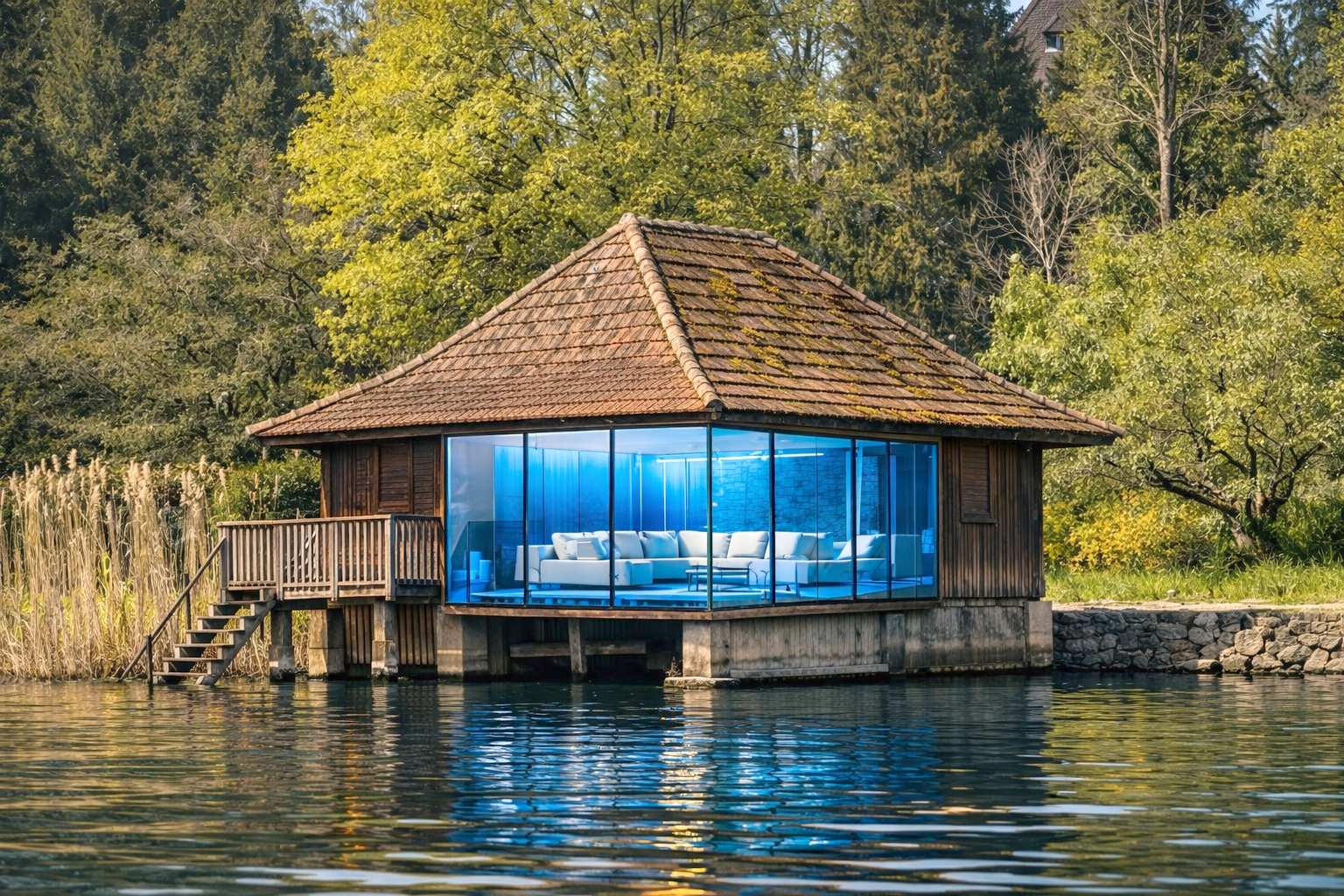
Boathouses as exclusive hotel rooms
Boathouses were once an essential part of the region’s infrastructure. They served as shelters and storage spaces for boats and played an important role in the transport of goods and passengers across the lake.
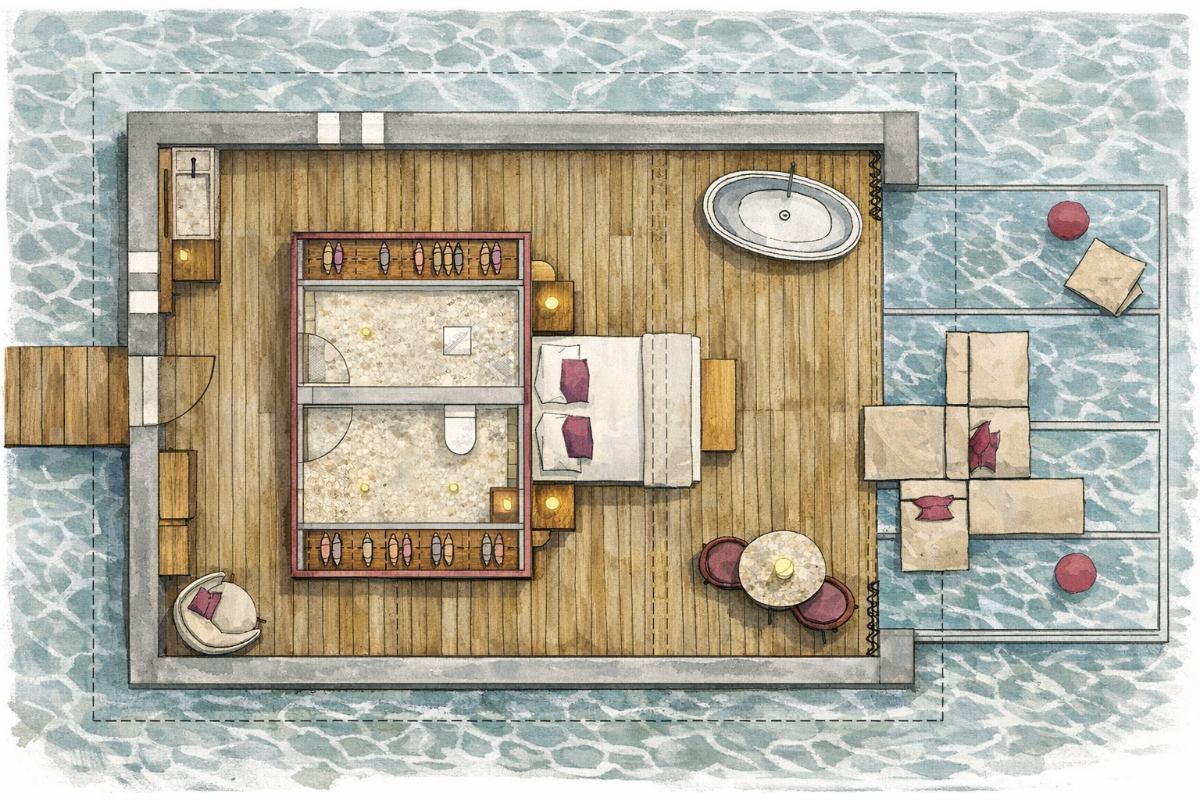
Many of these buildings still exist today, although their original purpose has largely disappeared. The concept proposes transforming these buildings into exclusive hotel rooms, giving them a new purpose.
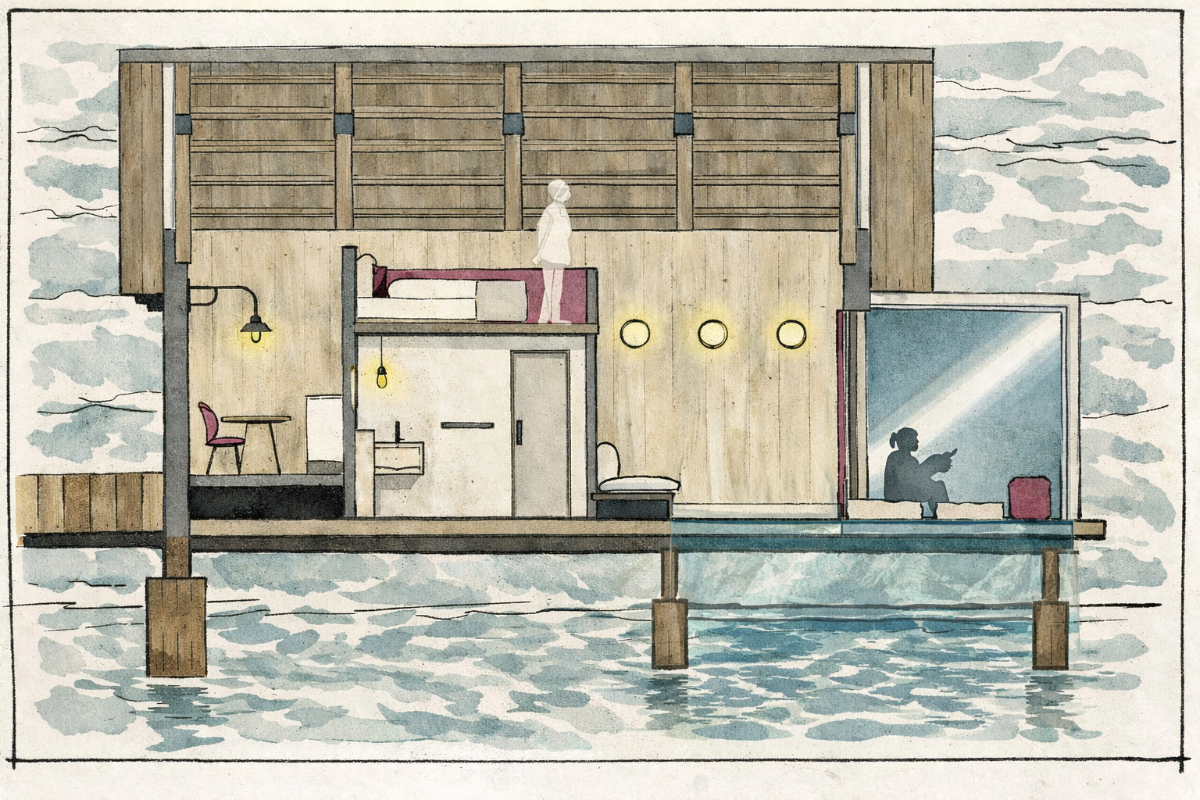
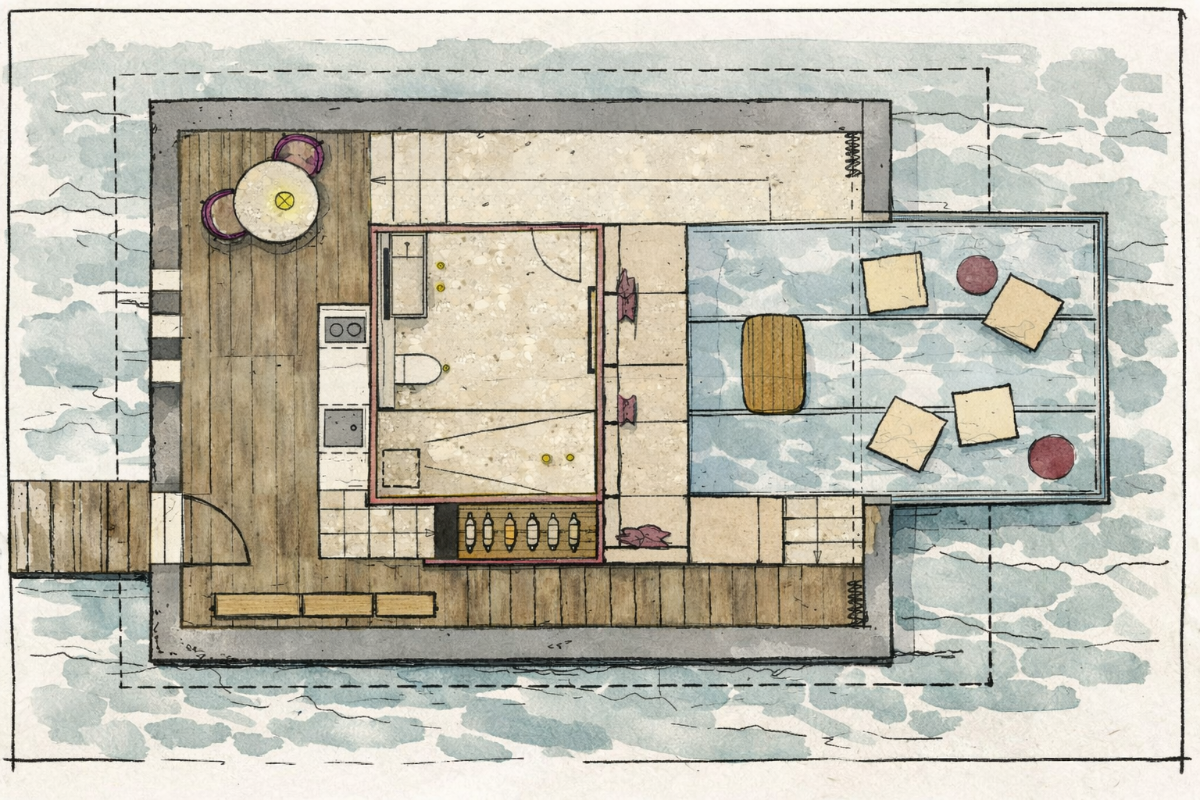
The original architecture is carefully preserved. Rather than relying on extensive interventions, the concept integrates a contemporary glass cube into the existing structure. This addition opens the interior up to the water and turns the lake itself into a central element of the guest experience.
Guests sleep directly at the water’s edge, experience a variety of lighting moods and observe life around the lake from an entirely new perspective.
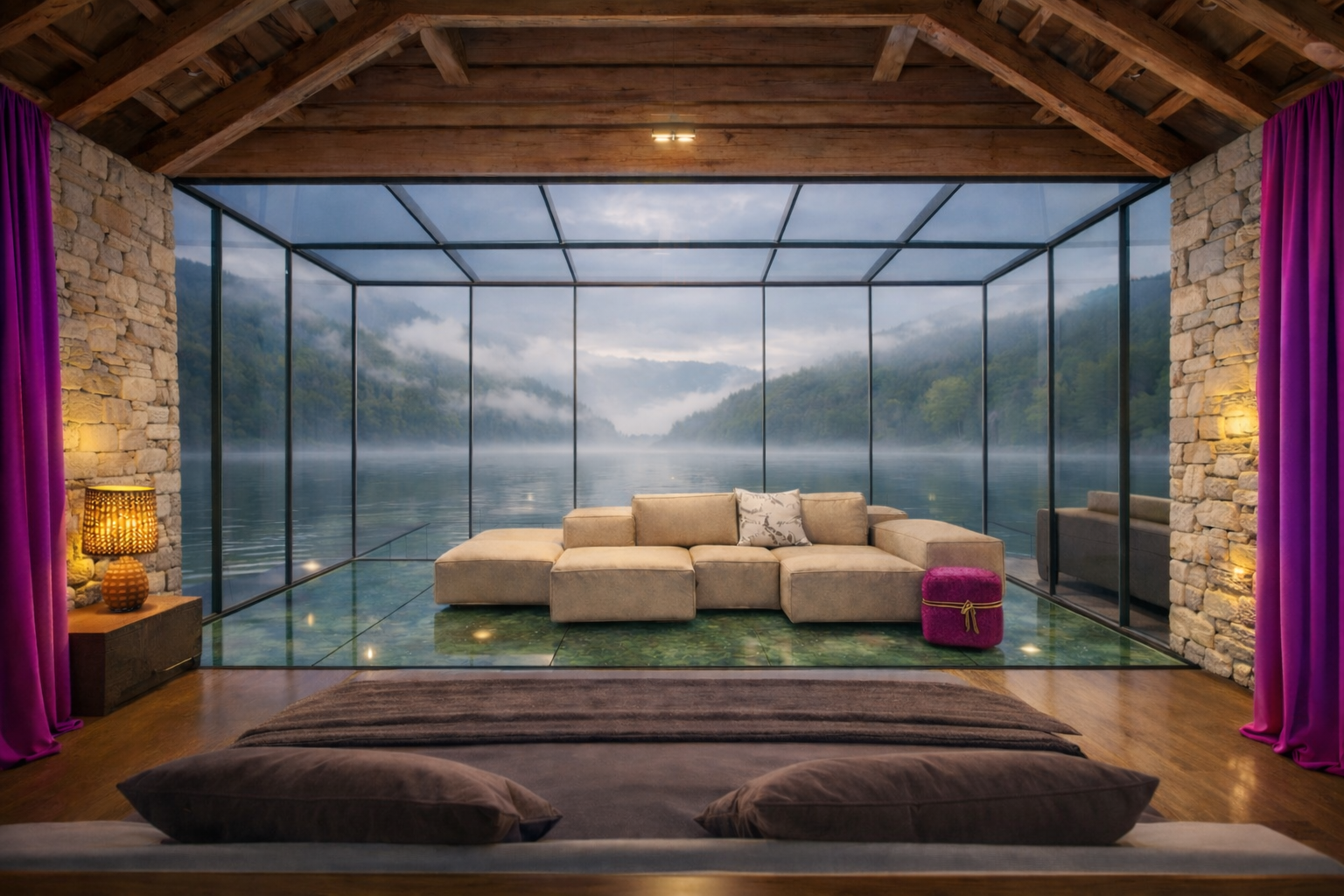
History reflected in the interior
The interior concept also builds on the history of the site. Natural materials such as wood and stone form the foundation of the spatial concept, creating a tangible connection to the historic fabric of the buildings.
These materials are complemented by subtle nautical references, including nets, ropework and maritime elements that recall the former use of the boathouses.
The distinctive glass cube serves not only as an architectural focal point but also as a key element of the project’s identity. Through carefully selected colour accents, each boathouse develops its own character while also serving as a visual marker within the landscape.
Former steamships become places of encounter
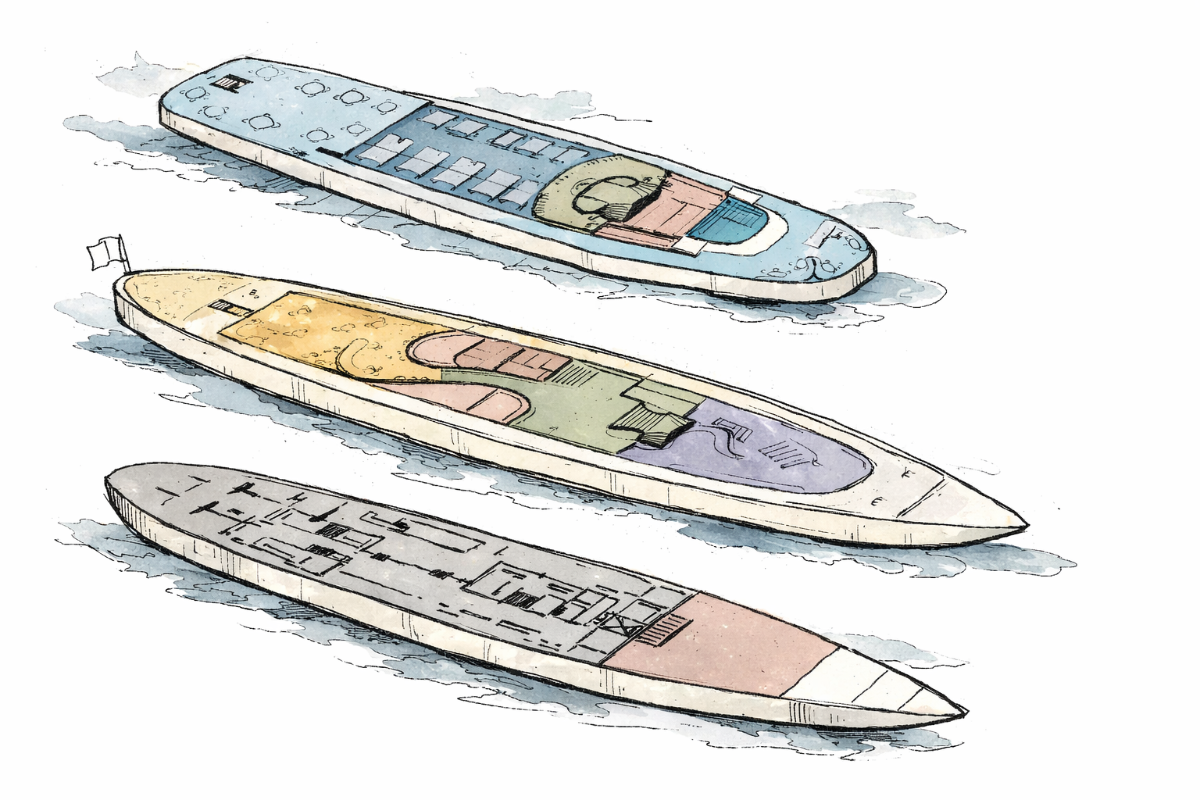
While the boathouses provide private retreats for guests, former steamships house the hotel’s public spaces.
Within the concept, the ships are transformed into vibrant social spaces housing the lobby, library, restaurant, café and event areas. The hotel rooms, meanwhile, can only be reached by boat transfer – turning the journey itself into an integral part of the guest experience.
In this way, the ships remain part of life on the lake, but in a new role. Means of transport become places of encounter. Infrastructure becomes hospitality.
Another intriguing aspect of the concept is that the ships can operate from different locations, allowing guests to experience Lake Lucerne from a variety of perspectives.
An alternative to mass tourism
The concept was deliberately conceived as an alternative to conventional mass tourism. Instead of creating large hotel complexes or standardised experiences, «Where Water Remembers» invites guests to slow down and connect more closely with local culture.
Guests do not simply discover individual places, but experience Lake Lucerne as a connected cultural landscape and a journey in itself. Small communities, historic buildings and local stories become part of a journey that extends far beyond a conventional hotel stay.
When heritage meets hospitality
«Where Water Remembers» illustrates how heritage conservation and contemporary hospitality can successfully come together.
Historic buildings are not preserved as static relics of the past, but actively integrated into the present. Former transport infrastructure is transformed into places of arrival, encounter and discovery.
Although «Where Water Remembers» is a fictional concept, it addresses themes that are becoming increasingly relevant within the hospitality industry: the adaptive reuse of existing buildings, authentic guest experiences and the responsible treatment of cultural heritage.
And perhaps this is the most compelling form of hospitality: creating spaces that offer more than a place to stay – spaces that allow history to be experienced.
Chiara Di Donato
|
Interior Architect
Explore More Space Stories
Space Story #4 | 26 March 2020
60 Crates Turned into an Exhibition Stand
For the Doha Jewellery & Watches Exhibition in Qatar, DOBAS designed and built a 900m2 exhibition stand. The logistics required careful planning and coordination.
Space Story #45 | 22 January 2025
Travel Journal by Interior Architect Carolin: Costa Rica
Interior architect Carolin Kotte got to experience «pura vida» on her travels through Costa Rica. She was especially impressed by the relationship between architecture and nature – and the morning wake-up calls of the howler monkeys.